 Wikimedia Commons
Boraginaceae
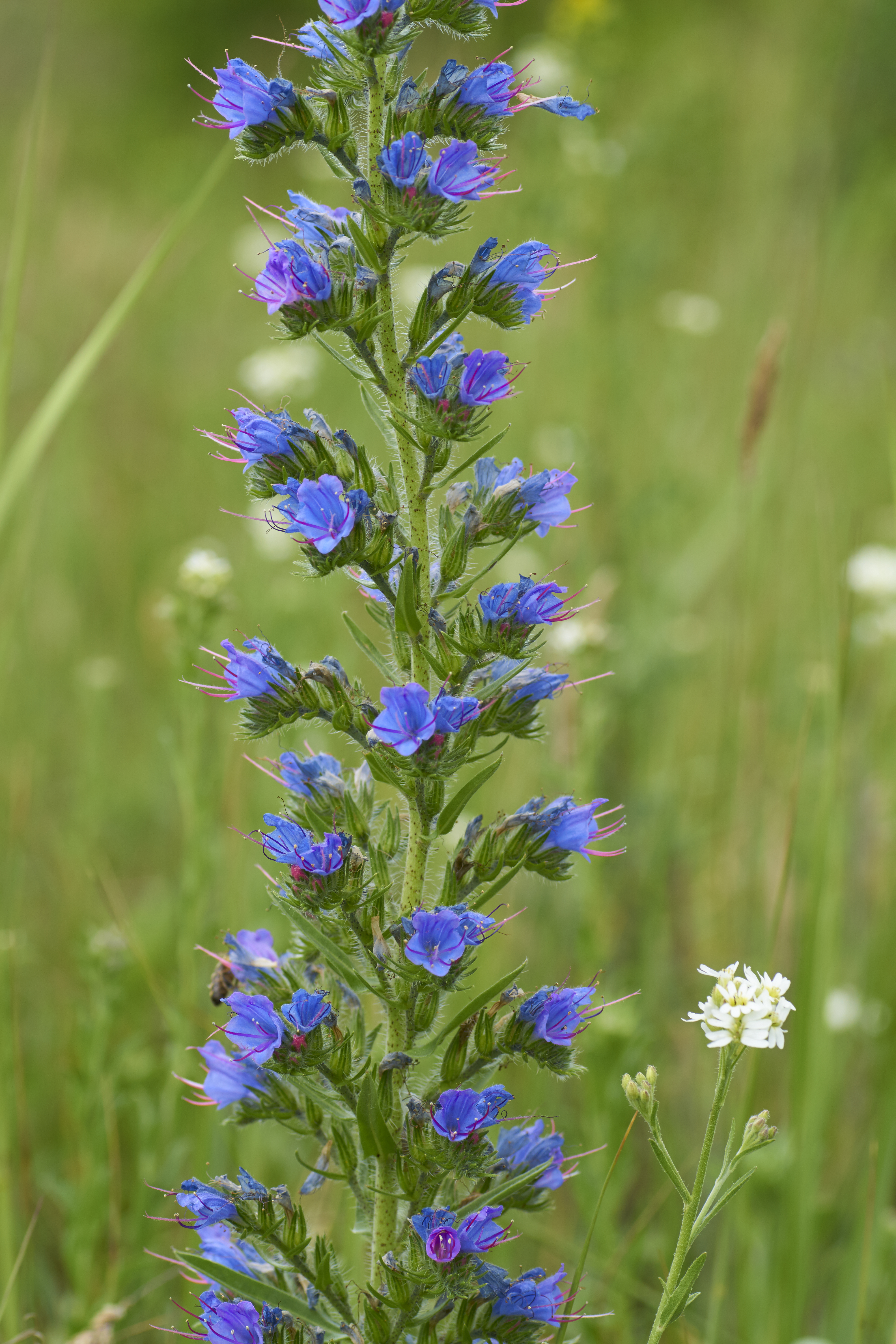
Viper's Bugloss
Echium vulgare
Falsehood unmasked, brilliance, wild courage.
- Family
- Boraginaceae
- Genus
- Echium
- Native to
- Europe, Western Asia
- Bloom season
- Spring, Summer
- Type
- Biennial
- Height
- 30–80 cm (12–32 in)
- Sunlight
- Full sun
- Soil
- Sandy, lean, well-drained
- Water
- Low
- Hardiness
- 3–8
- Lifespan
- Biennial
Did you know
- Medieval herbalists believed viper's bugloss was a cure for snakebite—the long red stamens jutting from the blue flowers were said to look like a snake's forked tongue, signaling its medicinal use under the 'Doctrine of Signatures.'
- Each plant produces brilliant electric-blue flowers that change to pink as they age, often showing both colors at once on a single spike.
- Bees love it so passionately that beekeepers in New Zealand sow whole fields of viper's bugloss—the resulting honey is pale and famously fragrant.
- A single plant can produce up to 2,800 nectar-rich blooms over its summer—it ranks among the top 5 nectar plants in Britain by sugar production.
- Though pretty, the plant has stiff bristly hairs that can cause skin irritation—Roman herbalist Pliny noted this 2,000 years ago and warned against handling it bare-handed.
Color meanings
0
falsehood unmasked
1
brilliance
2
wild courage