 Wikimedia Commons
Nepenthaceae
Tropical Pitcher Plant
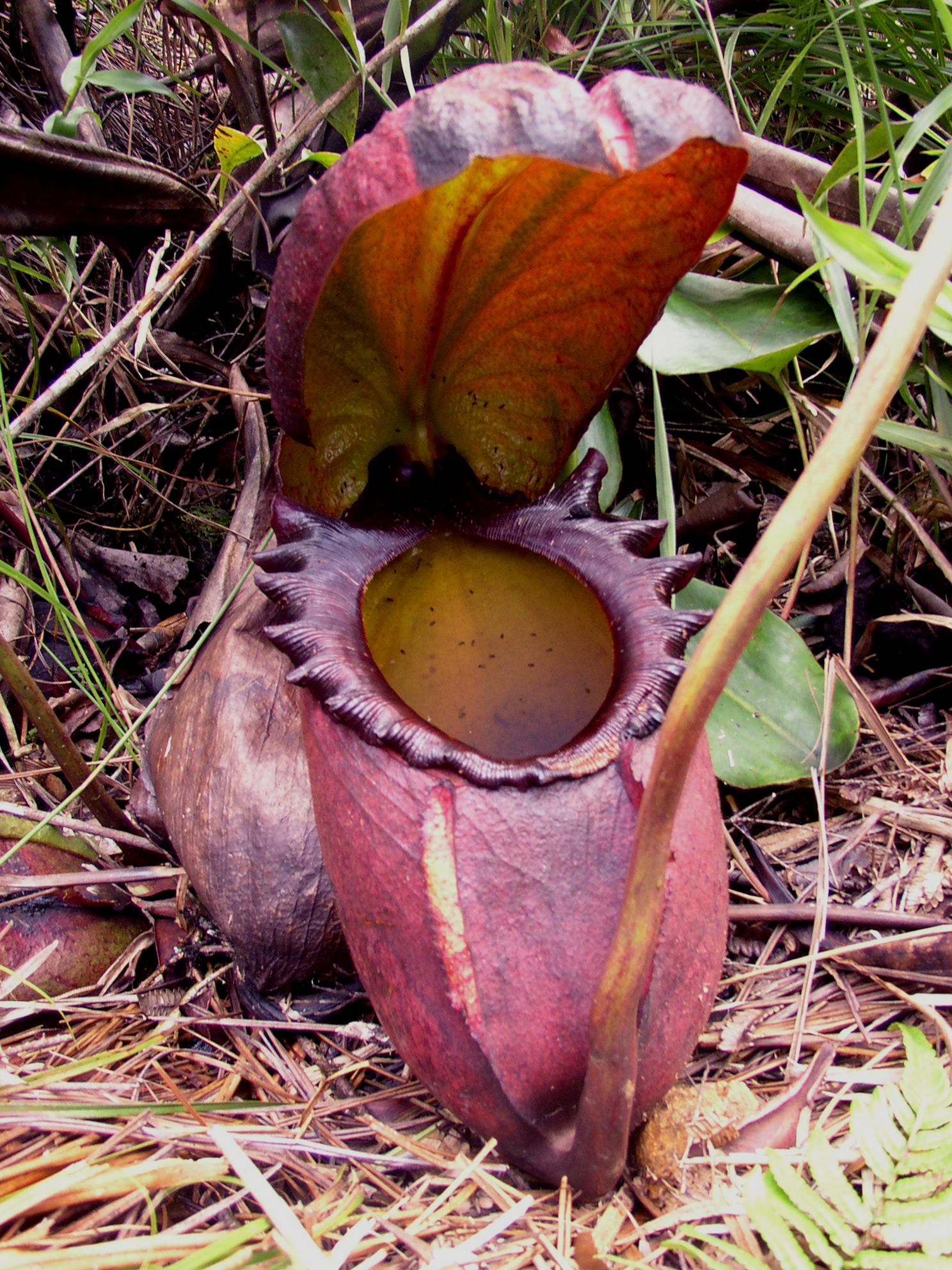
Nepenthes rajah
Wild appetite, exotic mystery, jungle hunger.
- Family
- Nepenthaceae
- Genus
- Nepenthes
- Native to
- Borneo (Mount Kinabalu)
- Bloom season
- Spring, Summer
- Type
- Carnivorous vine
- Height
- 1–3 m (3–10 ft) climbing
- Sunlight
- Bright indirect light
- Soil
- Sphagnum moss, perlite, very acidic
- Water
- High (rainwater only)
- Hardiness
- 10–12
- Lifespan
- Long-lived perennial
Did you know
- Nepenthes rajah produces the largest carnivorous pitchers in the world—the cup-shaped traps can hold over 3.5 liters of liquid, large enough to drown rats and small lizards.
- Some Nepenthes species form symbiotic relationships with tree shrews and bats—the animals defecate into the pitchers as they drink the nectar, providing the plant's main nitrogen source.
- Nepenthes flowers are surprisingly modest—small greenish-brown clusters on long stalks, often missed by visitors mesmerized by the spectacular pitcher traps.
- The species was first described in 1859 by British naturalist Spenser St. John, who watched a drowned rat being slowly digested in a pitcher and named the plant 'rajah' (king) for its size.
- Tropical pitcher plants grow only in nutrient-poor soils on tropical mountains—they're carnivorous because their habitat provides almost no nitrogen, so they evolved to digest insects instead.
Color meanings
0
wild appetite
1
exotic mystery
2
jungle hunger