 Wikimedia Commons
Liliaceae
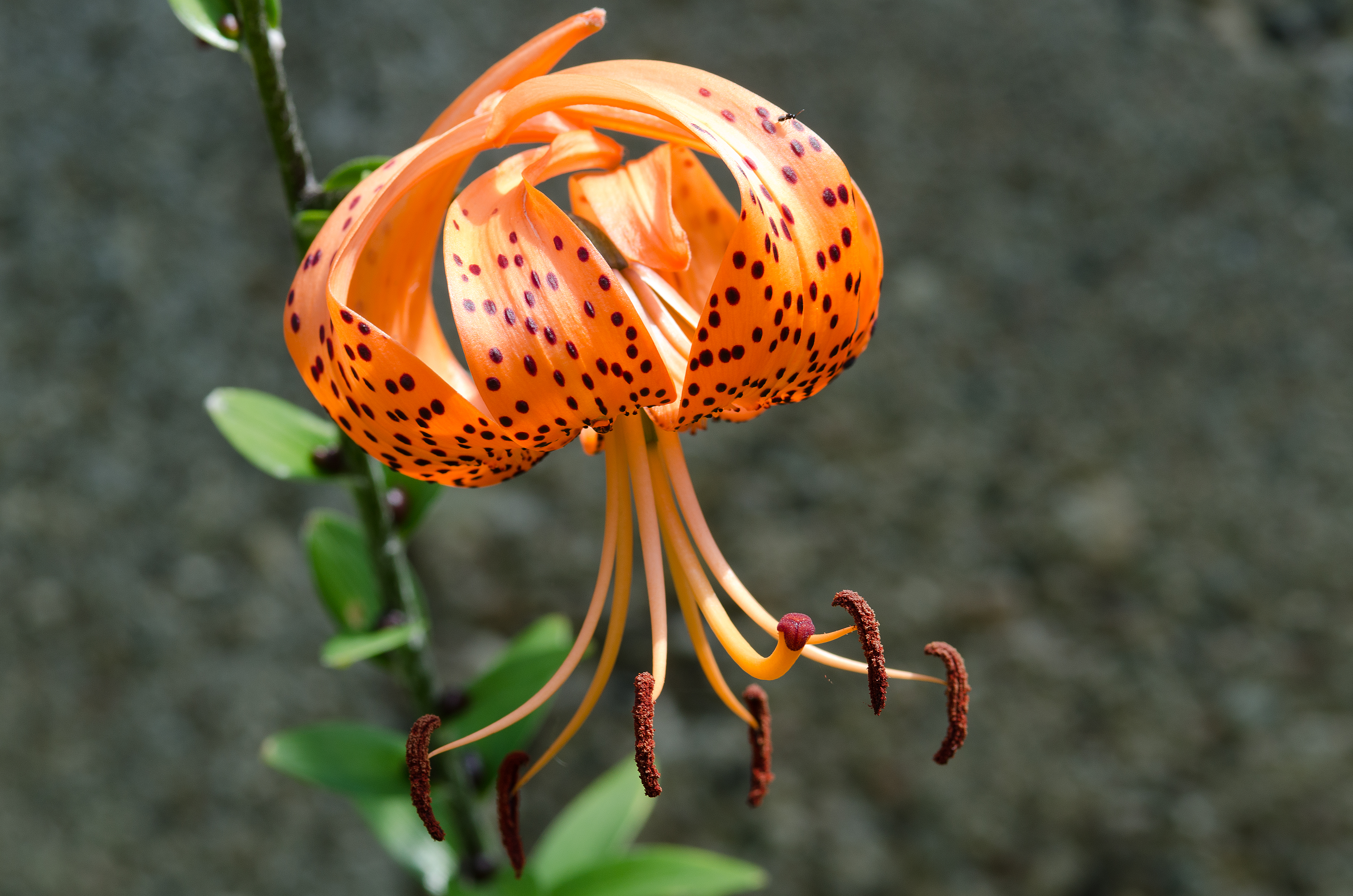
Tiger Lily
Lilium lancifolium
Wealth, pride, prosperity, mercy.
- Family
- Liliaceae
- Genus
- Lilium
- Native to
- China, Japan, Korea, Russian Far East
- Bloom season
- Mid To Late Summer
- Type
- bulbous perennial
- Height
- 60–150 cm
- Sunlight
- Full sun to partial shade
- Soil
- Well-drained, rich
- Water
- Regular
- Hardiness
- 3–9
- Lifespan
- Perennial
Did you know
- The bold black spots on tiger lily petals give the flower its name — the markings resemble tiger fur.
- Tiger lilies reproduce through tiny dark 'bulbils' that form in the leaf axils, falling to the ground to grow new plants.
- The bulbs are edible and have been a staple of East Asian cuisine for centuries — they taste somewhat like potatoes or chestnuts.
- Tiger lilies are sterile triploids, meaning they cannot produce seeds and can only reproduce vegetatively.
- Like all true lilies, tiger lilies are highly toxic to cats — even small exposure can cause acute kidney failure.