 Wikimedia Commons
Orchidaceae
Tongue Orchid
Serapias lingua
Sheltering warmth.
- Family
- Orchidaceae
- Genus
- Serapias
- Native to
- Mediterranean, Southern Europe, North Africa
- Bloom season
- Spring
- Type
- tuberous perennial
- Height
- 0.5-1.5 ft
- Sunlight
- full sun to part shade
- Soil
- dry to moist, calcareous
- Water
- low
- Hardiness
- 7-10
- Lifespan
- perennial
Did you know
- Serapias orchids are unique in pollinating themselves by trapping sleeping male solitary bees — the bee enters the warm tubular hood of the flower seeking a sheltered overnight roost, picks up pollen, and carries it to the next flower it chooses to sleep in.
- This pollination strategy — using the flower as a sleeping chamber — is unique to the genus Serapias among all flowering plants and represents a completely independent co-evolutionary pathway from all other orchid pollination systems.
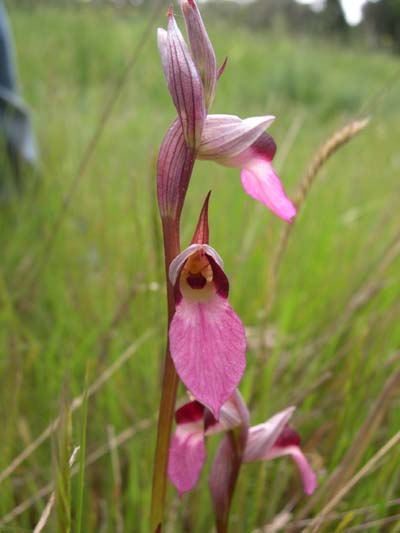
- The large, tongue-like lip (the 'lingua' of the species name) protrudes from the tubular hood and acts as a landing platform; its fuzzy texture and purple-red color create a realistic impression of a dark, sheltered cavity to a tired bee.
- The genus name Serapias honors Serapis, the ancient Greco-Egyptian deity worshipped across the Mediterranean world, reflecting the plant's distribution throughout the classical world's heartland.
- Serapias orchids are remarkably variable in color — within a single population, flowers can range from nearly white through pink to deep blood-red, and genetic studies show this variation is heritable but not associated with fitness differences.
Color meanings
0
shelter
1
warmth
2
hospitality