 Wikimedia Commons
Rosaceae
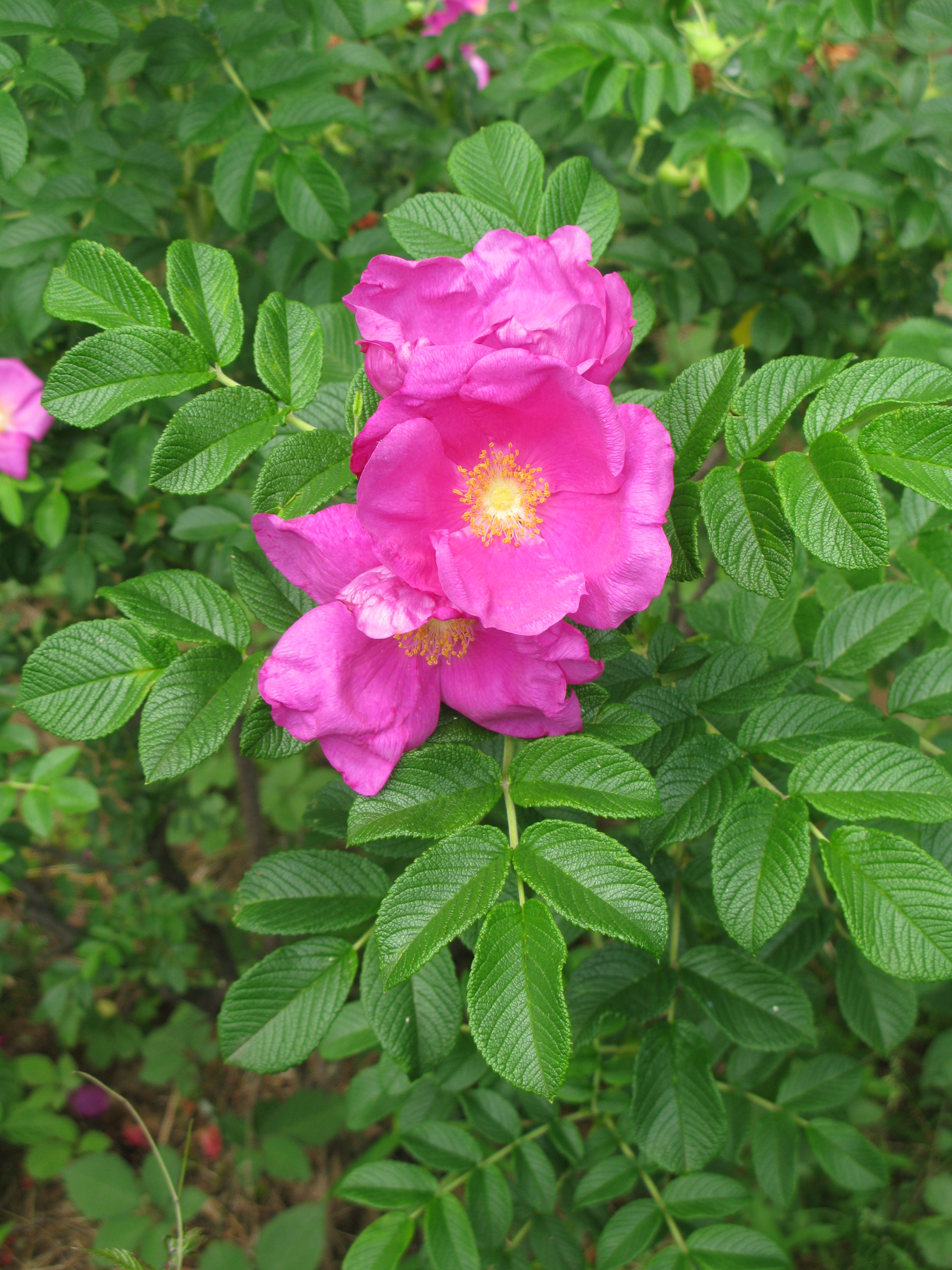
Rugosa Rose
Rosa rugosa
Resilience, sturdy beauty, untamed grace.
- Family
- Rosaceae
- Genus
- Rosa
- Native to
- Eastern Asia (Japan, Korea, northern China, Russian Far East)
- Bloom season
- Late Spring, Summer, Fall
- Type
- Deciduous suckering shrub
- Height
- 1–2 m
- Sunlight
- Full sun
- Soil
- Sandy, well-drained, salt-tolerant
- Water
- Low; drought-tolerant
- Hardiness
- 2–7
- Lifespan
- Long-lived shrub
Did you know
- Rugosa roses are the toughest roses in the world — they thrive in salt spray, sand dunes, sub-zero winters, and conditions that would kill any cultivated rose.
- The species name rugosa means 'wrinkled' in Latin, referring to the deeply textured leaves that look almost quilted.
- Rugosas produce some of the largest and most flavorful rose hips of any rose species — bright cherry-tomato-sized fruits packed with vitamin C, used for syrups, jams, and tea.
- It's so well adapted to coastal life that it has naturalized along beaches across northern Europe, sometimes too aggressively — it's considered invasive in parts of Scandinavia.
- The flowers have an extraordinarily intense, classical rose fragrance unlike any modern hybrid tea rose.
Color meanings
Pink
Wild devotion