 Wikimedia Commons
Solanaceae
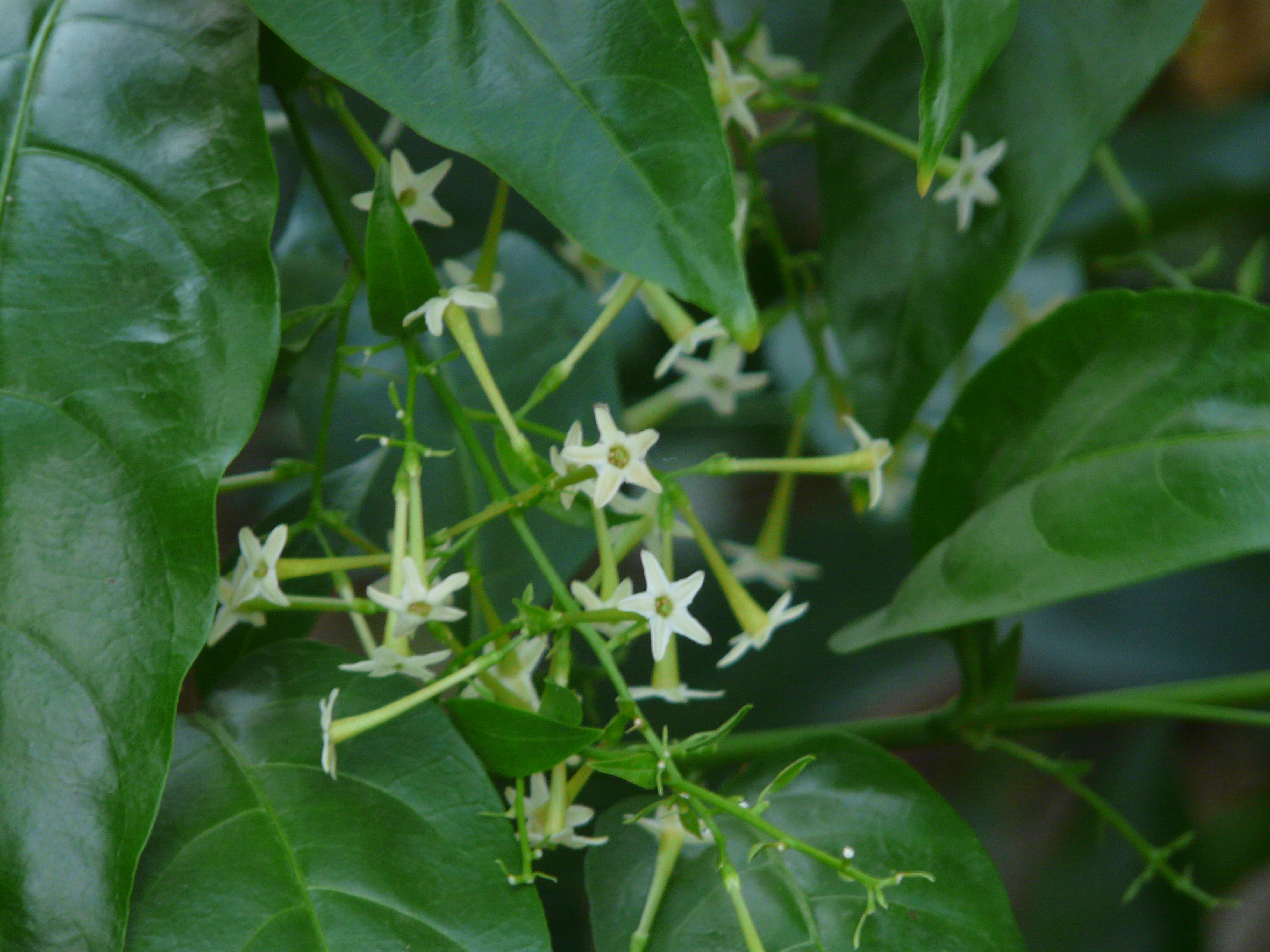
Night-Blooming Jasmine
Cestrum nocturnum
Hidden beauty and intoxicating mystery.
- Family
- Solanaceae
- Genus
- Cestrum
- Native to
- West Indies, Central America
- Bloom season
- Summer, Fall
- Type
- evergreen shrub
- Height
- 2–4 m
- Sunlight
- full sun to part shade
- Soil
- fertile, well-drained
- Water
- medium
- Hardiness
- 8–11
- Lifespan
- long-lived perennial
Did you know
- Despite the name, it is not a true jasmine — it is in the nightshade family alongside tomatoes and tobacco.
- By day the flowers are unremarkable green tubes; at dusk they open and release one of the most powerful floral scents on Earth.
- The fragrance can be sensed from over 30 meters away on a still night and is the trademark of tropical evenings.
- It is pollinated almost exclusively by night-flying hawk moths drawn from astonishing distances.
- Its tiny white berries are toxic to humans but eaten and dispersed by tropical birds.
Color meanings
White
secret intensity that only night reveals