 Wikimedia Commons
Malvaceae
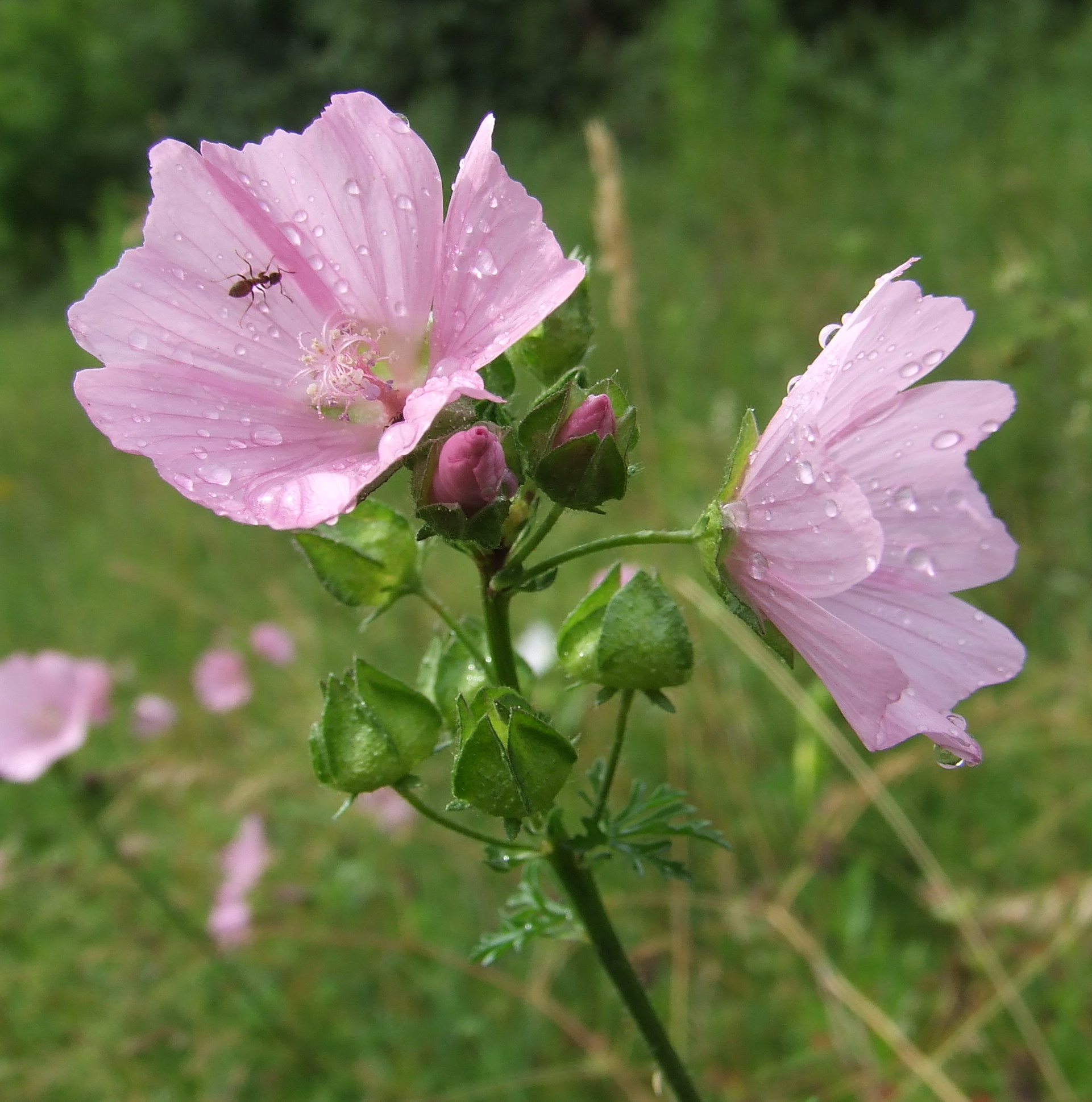
Musk Mallow
Malva moschata
Sweetness and mildness.
- Family
- Malvaceae
- Genus
- Malva
- Native to
- Europe, Southwestern Asia
- Bloom season
- Summer
- Type
- perennial herb
- Height
- 1.5-3 ft
- Sunlight
- full sun
- Soil
- well-drained, moderately fertile
- Water
- low to moderate
- Hardiness
- 3-9
- Lifespan
- perennial
Did you know
- The common name 'musk mallow' refers to the faint musky scent of the leaves and seeds when crushed — the aromatic compound responsible, muscone, is the same molecule found in the musk gland of the musk deer.
- Musk mallow has been grown in European cottage gardens since at least the 14th century, and the white-flowered form 'Alba' is considered particularly refined, appearing in garden records from Tudor England.
- Like all mallows, the flowers are rich in mucilage — a gel-like polysaccharide that soothes irritated mucous membranes; mallow tea made from flowers and leaves was historically drunk for coughs and sore throats.
- The intricately dissected upper leaves are botanically distinct from the broader lower leaves on the same plant, a trait called heterophylly that can make identification confusing without examining the whole plant.
- Bumblebees, honeybees, and solitary bees all forage heavily on musk mallow, and the plant's long flowering season (up to 3 months) makes it one of the most sustained pollen sources in the summer garden.
Color meanings
0
sweetness
1
gentle persuasion
2
mildness