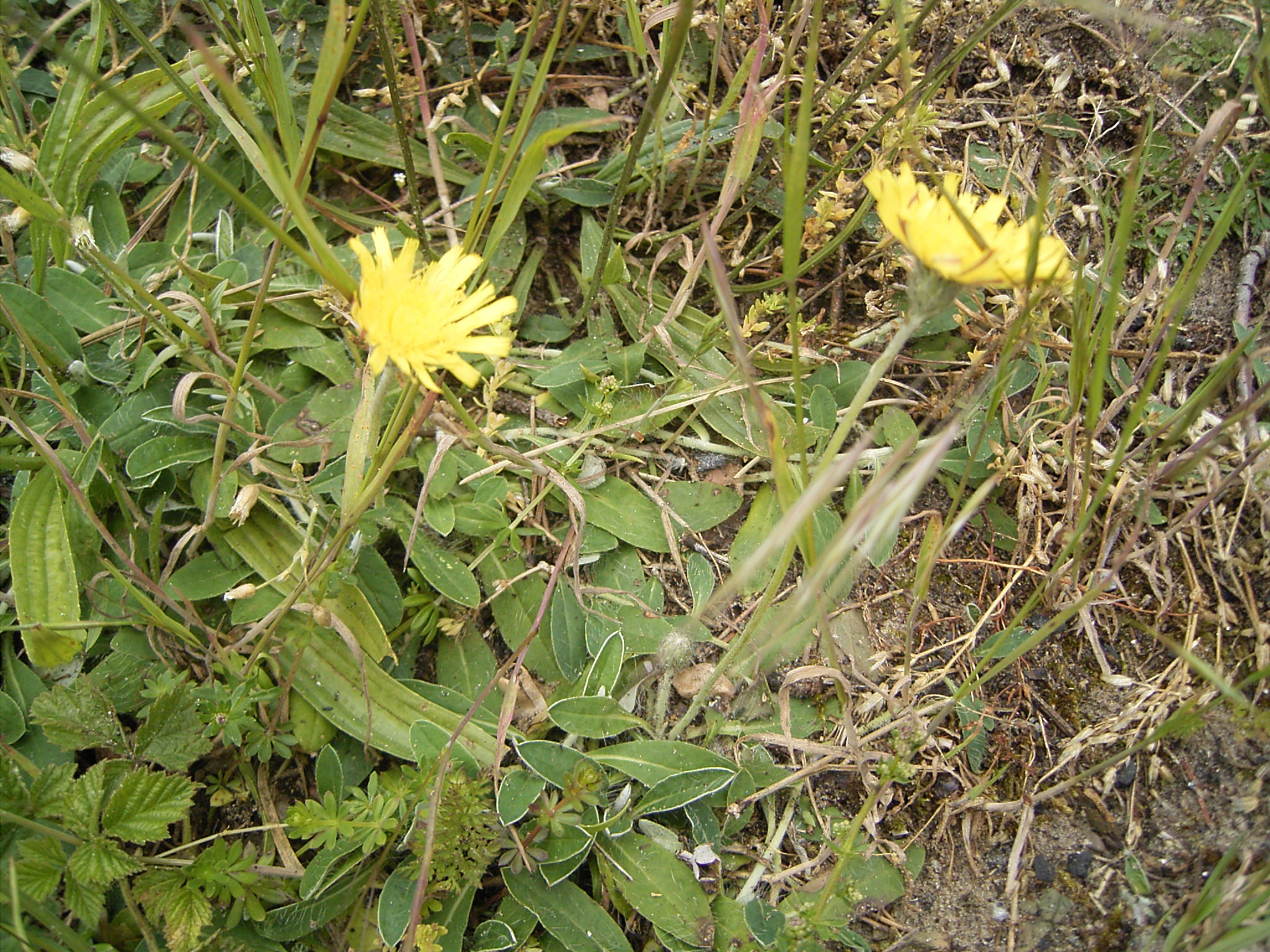
 Wikimedia Commons
Asteraceae
Mouse-ear Hawkweed
Pilosella officinarum
Cheerful persistence.
- Family
- Asteraceae
- Genus
- Pilosella
- Native to
- Europe, Western Asia
- Bloom season
- Spring, Summer
- Type
- perennial herb
- Height
- 0.3-1 ft
- Sunlight
- full sun
- Soil
- dry, poor, sandy or rocky, well-drained
- Water
- low
- Hardiness
- 4-8
- Lifespan
- perennial
Did you know
- The common name comes from the soft, mouse-ear-shaped leaves covered in fine, white hairs that give them a distinctive silvery appearance.
- Hawkweeds were named from the ancient belief, recorded by Pliny, that hawks ate the plants to sharpen their eyesight — a myth that persisted for over a thousand years.
- Like its relative fox-and-cubs, mouse-ear hawkweed reproduces largely by apomixis (seeds without fertilization) and stolons, resulting in enormous genetic uniformity.
- The plant exudes allelopathic chemicals from its roots that inhibit the germination of competing plants, allowing it to dominate dry grassland patches.
- It was introduced to New Zealand and North America, where it has spread into pastures and roadsides, becoming a problematic weed in some regions.
Color meanings
0
modesty
1
quick sight
2
sunny optimism