 Wikimedia Commons
Asteraceae
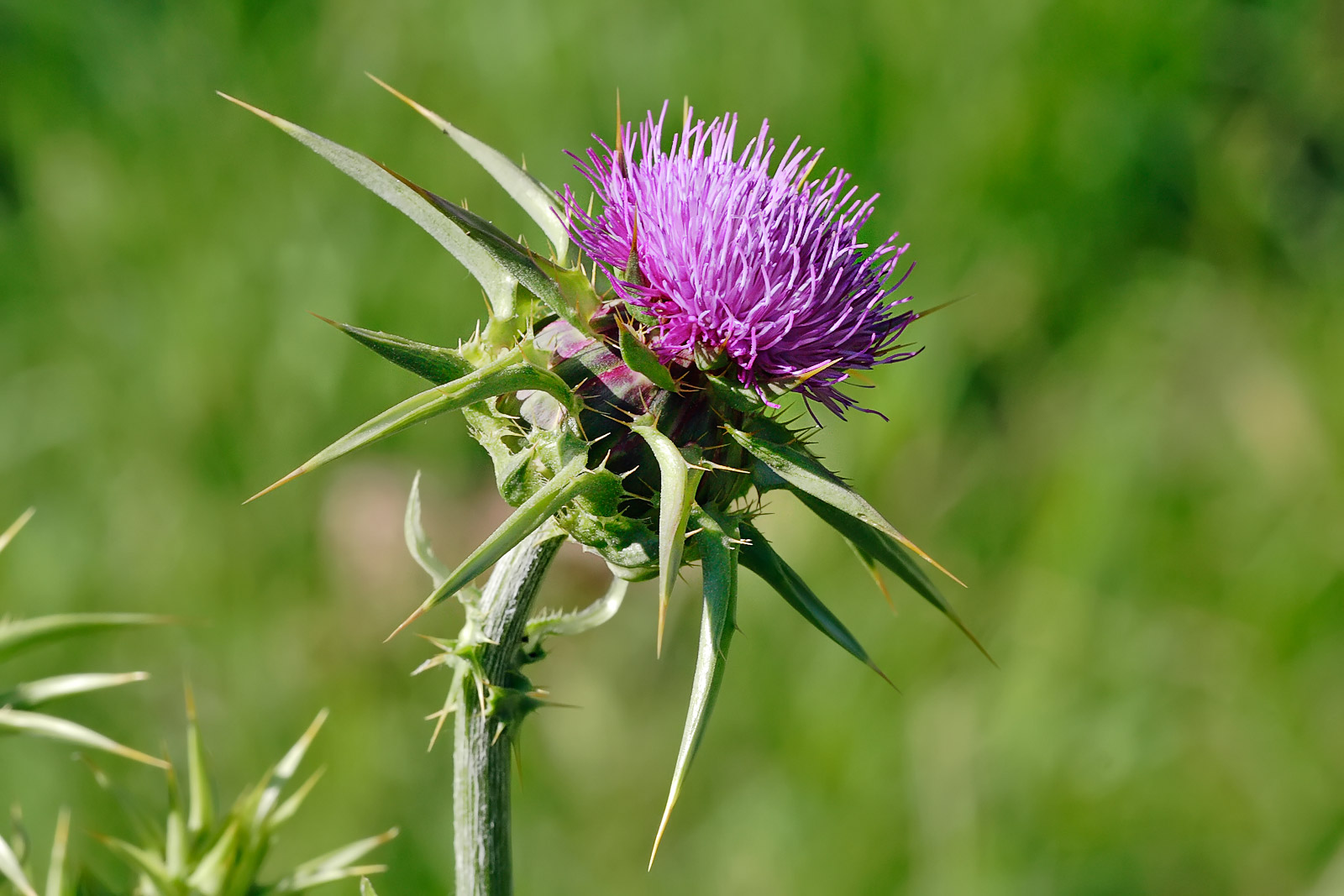
Milk Thistle
Silybum marianum
Healing, protection, the Virgin Mary.
- Family
- Asteraceae
- Genus
- Silybum
- Native to
- Mediterranean, north Africa, western Asia
- Bloom season
- Summer
- Type
- Biennial
- Height
- 60–200 cm
- Sunlight
- Full sun
- Soil
- Average, well-drained
- Water
- Low; drought-tolerant
- Hardiness
- Annual or biennial
- Lifespan
- Biennial
Did you know
- Milk thistle is named for the white-veined leaves, which Christian legend says were marked when drops of the Virgin Mary's milk fell on them — hence the species name marianum.
- Its seeds contain silymarin, one of the most powerful liver-protective compounds known, used medicinally for over 2,000 years and still widely used today.
- The thistle was the symbol of the medieval medical schools at Salerno and Padua and is still pictured on many pharmacy and herbalist signs.
- Despite the spiky leaves, the flowers are an important nectar source for bumblebees, honeybees, and butterflies.
- Milk thistle has naturalized as a weed in California pastures, where it can grow over 6 feet tall and form dense thorny stands.
Color meanings
Purple
Sacred medicine