 Wikimedia Commons
Verbenaceae
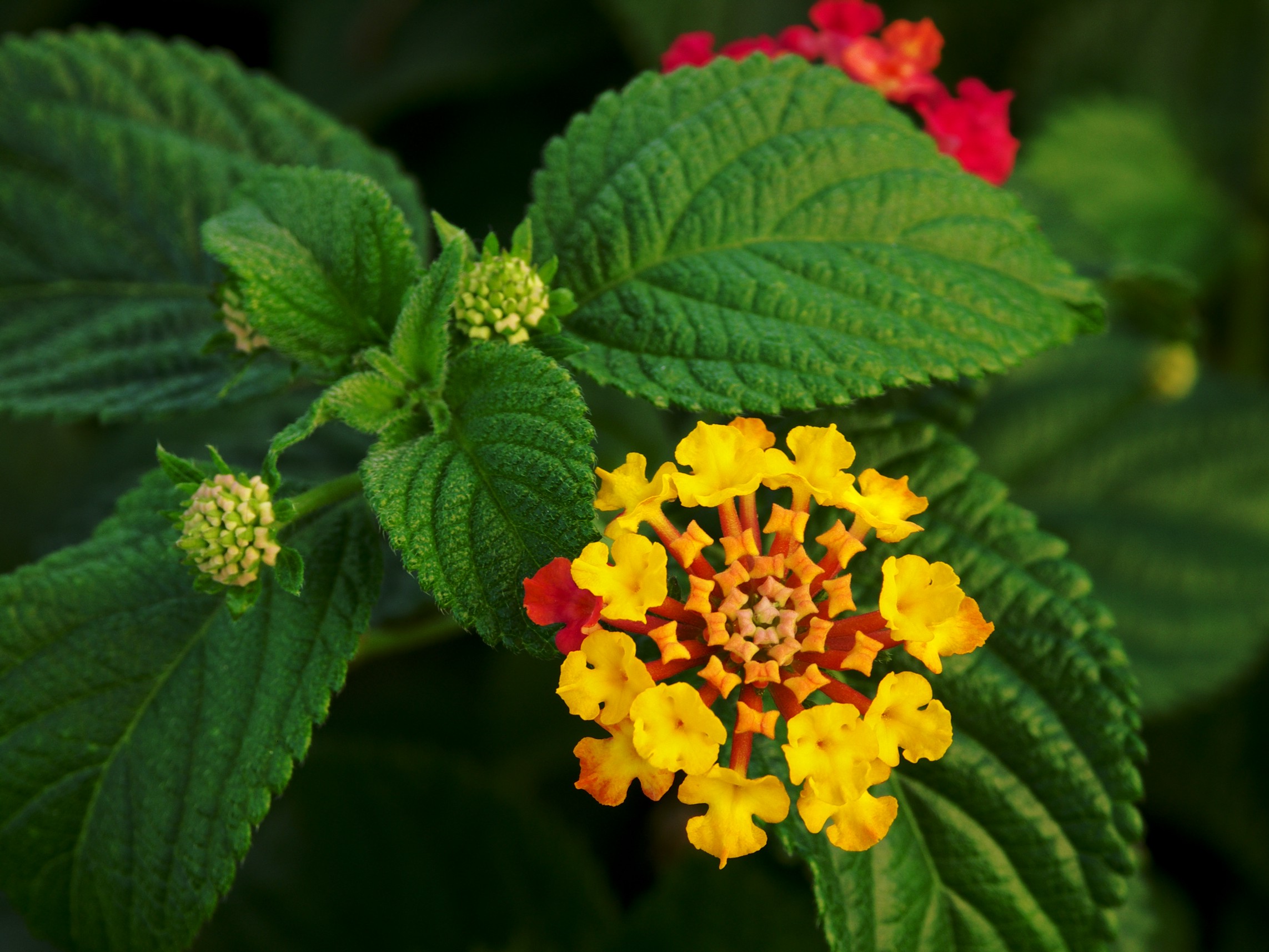
Lantana
Lantana camara
Rigor, severity, but also undying joy.
- Family
- Verbenaceae
- Genus
- Lantana
- Native to
- Central and South America
- Bloom season
- Spring, Summer, Fall, Year-Round In Tropics
- Type
- shrub or trailing perennial
- Height
- 0.3–2 m
- Sunlight
- Full sun
- Soil
- Well-drained, average
- Water
- Low to moderate; drought tolerant
- Hardiness
- 9–11
- Lifespan
- Perennial in warm climates
Did you know
- Lantana flowers change color as they age — starting yellow and shifting to orange, pink, and red — so a single cluster looks multicolored.
- The color change signals to pollinators which flowers still have nectar (the youngest, brightest ones) and which have already been pollinated.
- Lantana is one of the world's most invasive plants — it has overrun ecosystems in Africa, Asia, and Australia, causing major ecological damage.
- Despite its troublesome reputation, lantana is one of the best butterfly plants — adored by swallowtails, monarchs, and gulf fritillaries.
- The unripe berries of lantana are highly toxic to humans, livestock, and pets — a serious risk in regions where it grows wild.