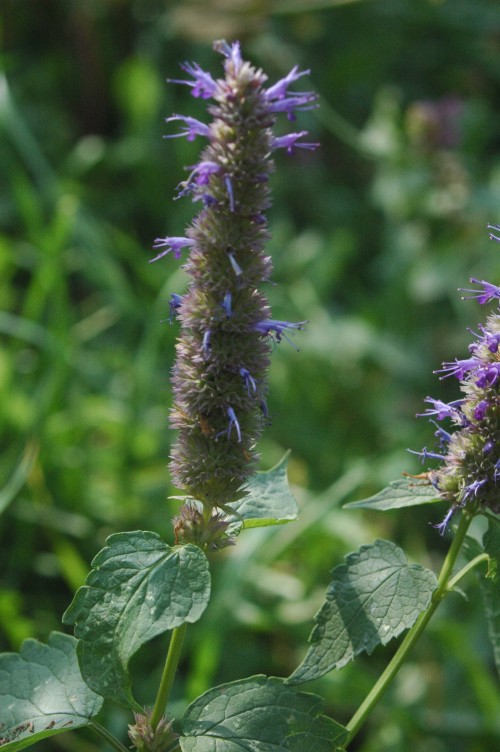
 Wikimedia Commons
Lamiaceae
Korean Mint
Agastache rugosa
Refreshment and healing.
- Family
- Lamiaceae
- Genus
- Agastache
- Native to
- China, Japan, Korea
- Bloom season
- Summer, Fall
- Type
- perennial
- Height
- 2-4 ft
- Sunlight
- full sun to partial shade
- Soil
- well-drained, average to fertile
- Water
- moderate
- Hardiness
- 5-9
- Lifespan
- perennial
Did you know
- Korean Mint has been used in traditional Korean and Chinese medicine for over 1,000 years to treat digestive ailments.
- The leaves have a complex flavor profile combining mint, anise, and licorice, making it versatile in Asian cuisine.
- It is one of the most important bee plants in Asia, producing copious nectar that yields a light, fragrant honey.
- The essential oil contains estragole and menthol, giving it both culinary value and insect-repelling properties.
- In Korea it is called 'bae cho hyang' and the leaves are used to wrap rice and meat dishes, similar to perilla leaves.
Color meanings
0
refreshment
1
healing
2
warmth