 Wikimedia Commons
Berberidaceae
Japanese Barberry Flower
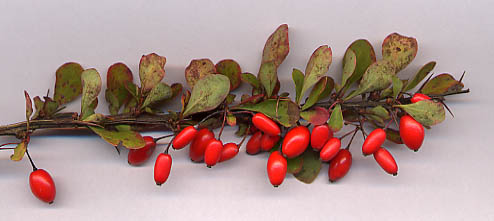
Berberis thunbergii
Protection and sharp boundaries.
- Family
- Berberidaceae
- Genus
- Berberis
- Native to
- Japan
- Bloom season
- Spring
- Type
- deciduous shrub
- Height
- 60-180 cm
- Sunlight
- full sun to partial shade
- Soil
- adaptable, well-drained
- Water
- low to moderate
- Hardiness
- 4-8
- Lifespan
- perennial
Did you know
- Japanese barberry was introduced to the United States in 1875 as a replacement for European barberry, which harbored wheat rust.
- The thorny branches make it an effective natural barrier, historically planted as a living fence.
- Researchers have found that areas with dense Japanese barberry have higher tick populations due to the humid microclimate it creates.
- The plant produces berberine, a bright yellow alkaloid compound currently studied for potential health benefits.
- It is now considered invasive in much of eastern North America and several states have banned its sale.
Color meanings
0
protection
1
sharpness
2
caution