 Wikimedia Commons
Rosaceae
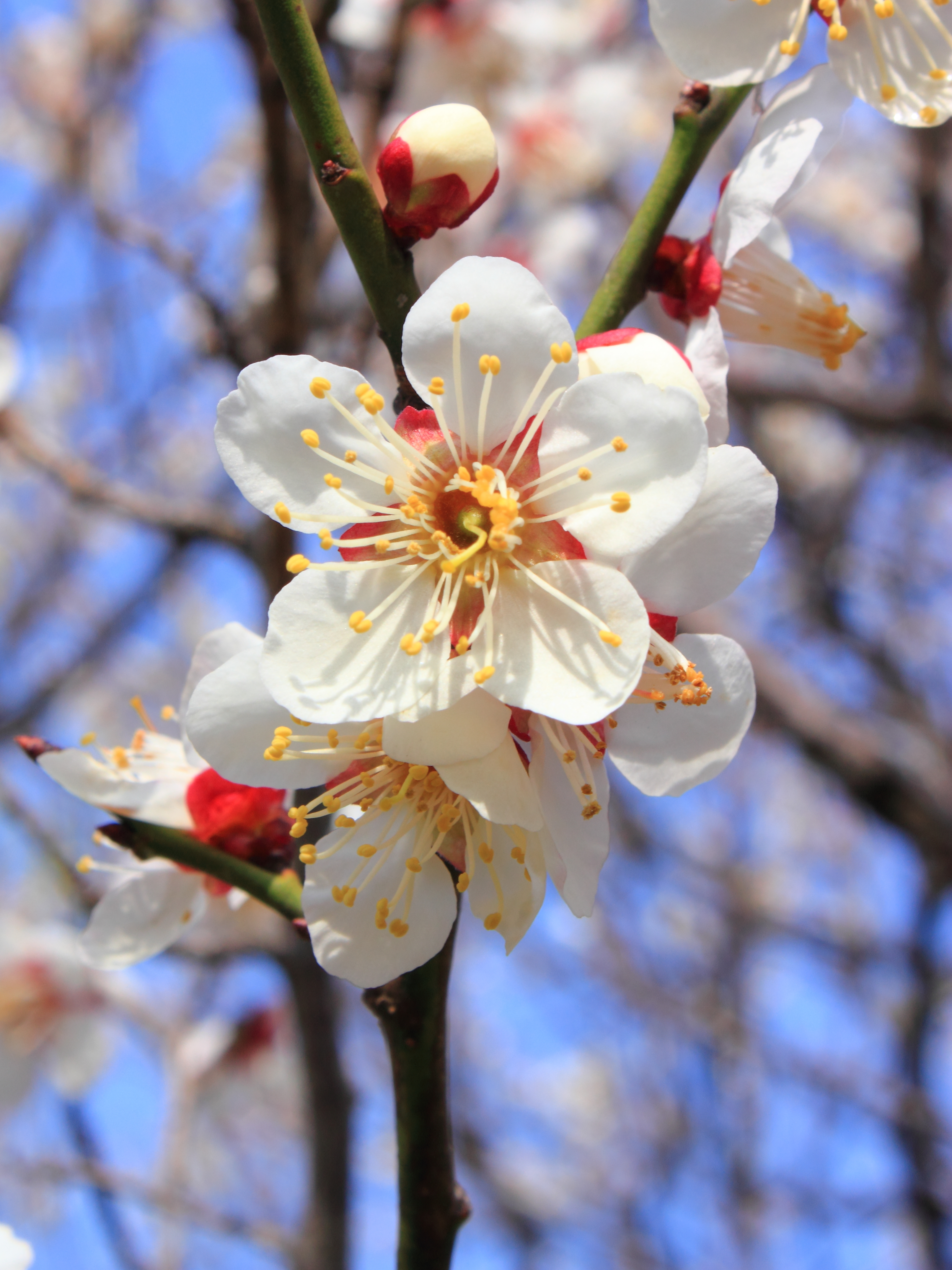
Japanese Apricot
Prunus mume
Endurance, perseverance, hope in winter.
- Family
- Rosaceae
- Genus
- Prunus
- Native to
- China, Korea, Japan
- Bloom season
- Winter, Early-Spring
- Type
- Tree
- Height
- 4–9 m (13–30 ft)
- Sunlight
- Full sun
- Soil
- Average, well-drained
- Water
- Moderate
- Hardiness
- 6–9
- Lifespan
- Long-lived (40–80 years)
Did you know
- The Japanese apricot, called 'ume' in Japanese and 'meihua' in Chinese, blooms in late January or early February while snow is still on the ground—it's the symbol of perseverance through hardship across all of East Asia.
- It is one of China's 'Three Friends of Winter' (along with pine and bamboo)—a classical poetic trinity celebrated by Confucian scholars for over 2,000 years for their refusal to wilt in cold.
- Ume blossoms are the basis of the entire Japanese 'umeshu' liqueur and the famous 'umeboshi' pickled plums—the unripe green fruits are pickled with shiso and salt to make Japan's most beloved sour condiment.
- Tokyo's famous Yushima Tenmangu shrine has hosted a plum blossom festival since the 14th century—students still pray there before exams under blossoming ume trees.
- Despite the name, ume is not really an apricot or a plum—it's its own distinct species, Prunus mume, more closely related to apricots but with its own unique fruit and intense fragrance.
Color meanings
0
endurance
1
perseverance
2
hope in winter