 Wikimedia Commons
Lamiaceae
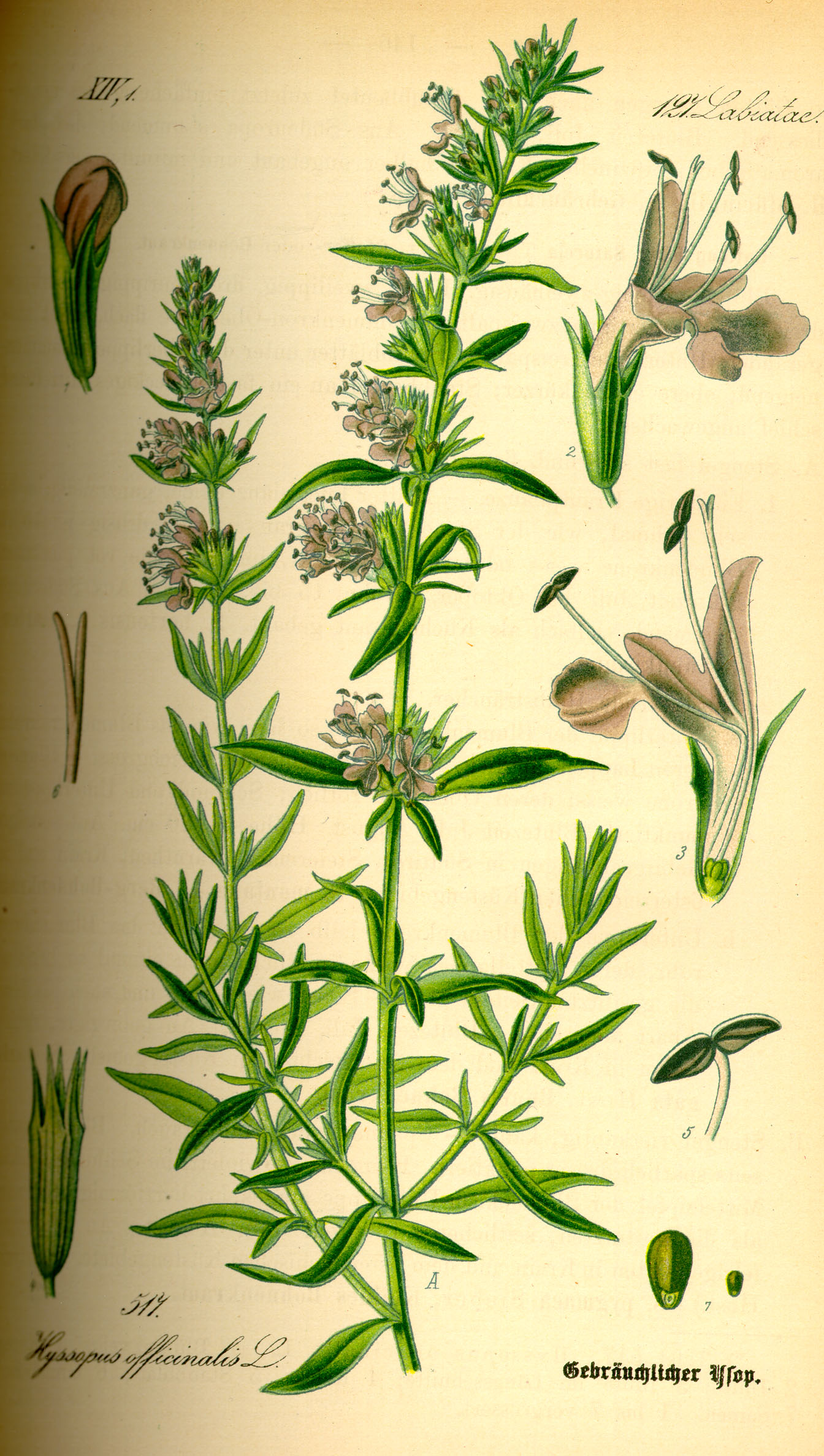
Hyssop
Hyssopus officinalis
Cleansing, sacrifice, ancient purity.
- Family
- Lamiaceae
- Genus
- Hyssopus
- Native to
- Southern Europe, Western Asia
- Bloom season
- Summer
- Type
- Perennial herb
- Height
- 30–60 cm (1–2 ft)
- Sunlight
- Full sun
- Soil
- Lean, well-drained, alkaline
- Water
- Low
- Hardiness
- 3–9
- Lifespan
- Long-lived perennial
Did you know
- True hyssop is mentioned dozens of times in the Bible as the plant used for ritual purification—Moses used hyssop branches to sprinkle blood on doorposts during the first Passover.
- Hyssop has been cultivated continuously in European monastery gardens since at least the 8th century—it's listed in Charlemagne's Capitulare de Villis as a required medicinal plant for every imperial estate.
- The deep blue flower spikes are powerfully attractive to honeybees—a single field of flowering hyssop produces some of the most aromatic honey in Europe.
- Hyssop oil is one of the principal botanical flavorings in Chartreuse, the green French liqueur made by Carthusian monks since 1737 from a secret recipe of 130 herbs.
- The species name 'officinalis' means 'of the apothecary'—a designation reserved for plants of major medicinal importance throughout European pharmacopeia history.
Color meanings
0
cleansing
1
sacrifice
2
ancient purity