 Wikimedia Commons
Solanaceae
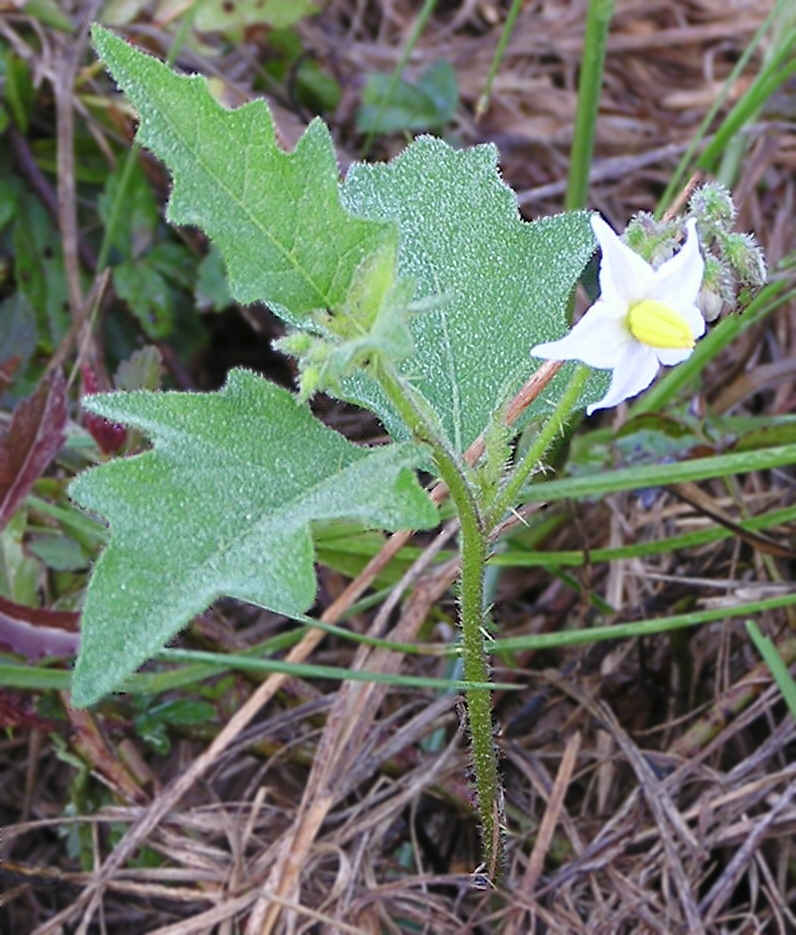
Horse Nettle
Solanum carolinense
Tenacious survival and warning.
- Family
- Solanaceae
- Genus
- Solanum
- Native to
- southeastern United States
- Bloom season
- Late Spring, Summer
- Type
- herbaceous perennial
- Height
- 30–100 cm
- Sunlight
- full sun
- Soil
- sandy, disturbed, well-drained
- Water
- low
- Hardiness
- 4–9
- Lifespan
- perennial; deep-rooted and persistent
Did you know
- Despite the name, horse nettle is neither a horse plant nor a nettle — it is a nightshade relative of tomatoes.
- The yellow berries resemble tiny tomatoes but are toxic to humans, containing the alkaloid solanine.
- Its stems and leaf veins are armed with sharp, star-shaped spines that easily pierce gloves.
- Horse nettle has roots that can extend 3 m deep, making it nearly impossible to eradicate by pulling.
- Some Native American tribes used very small, controlled doses of the root to treat sore throats.
Color meanings
White
deceptive beauty
Lavender
caution