 Wikimedia Commons
Campanulaceae
Horned Rampion
Phyteuma scheuchzeri
Alpine wonder.
- Family
- Campanulaceae
- Genus
- Phyteuma
- Native to
- Alps, Southern Europe
- Bloom season
- Summer
- Type
- perennial herb
- Height
- 0.5-1.5 ft
- Sunlight
- full sun
- Soil
- rocky, well-drained, calcareous, alpine
- Water
- low to moderate
- Hardiness
- 5-8
- Lifespan
- perennial
Did you know
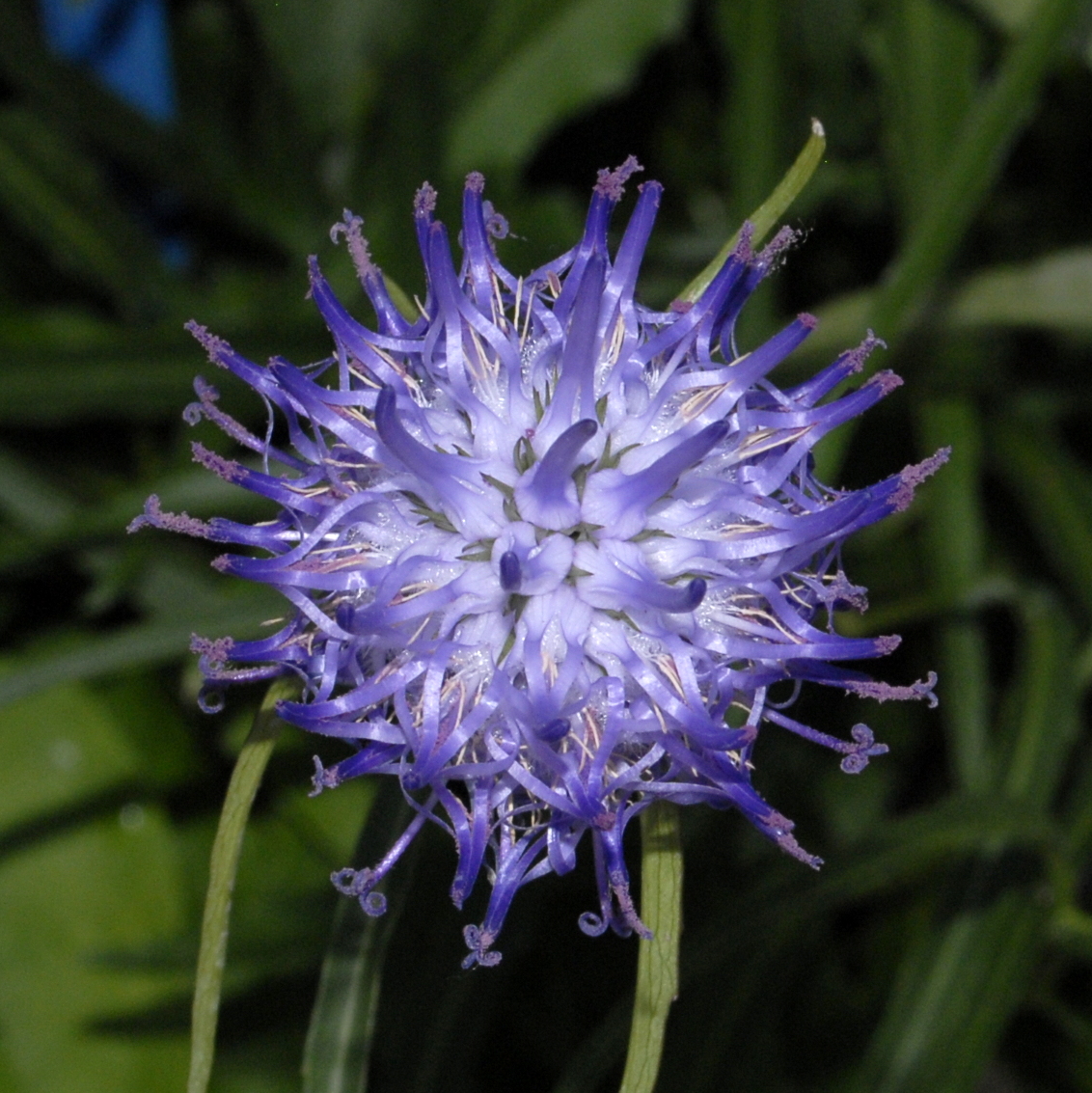
- The flowers are borne in a tight spherical or cylindrical head, with each individual floret having four to five curved, horn-like petals fused at the tip — hence 'horned rampion.'
- The genus Phyteuma is unusual in the bellflower family: the petals remain fused at their tips as the flower matures, forming curved tubes before finally splitting open.
- It grows on rocky limestone outcrops and screes in the Alps and Apennines, often at elevations above 6,000 feet.
- Related species including round-headed rampion (P. orbiculare) were once collected and eaten as root vegetables in parts of Europe, boiled like turnips.
- The genus name Phyteuma comes from the Greek word for a plant whose roots were used as a love charm, reflecting the ancient belief in its aphrodisiac properties.
Color meanings
0
steadfastness
1
rarity
2
mountain purity