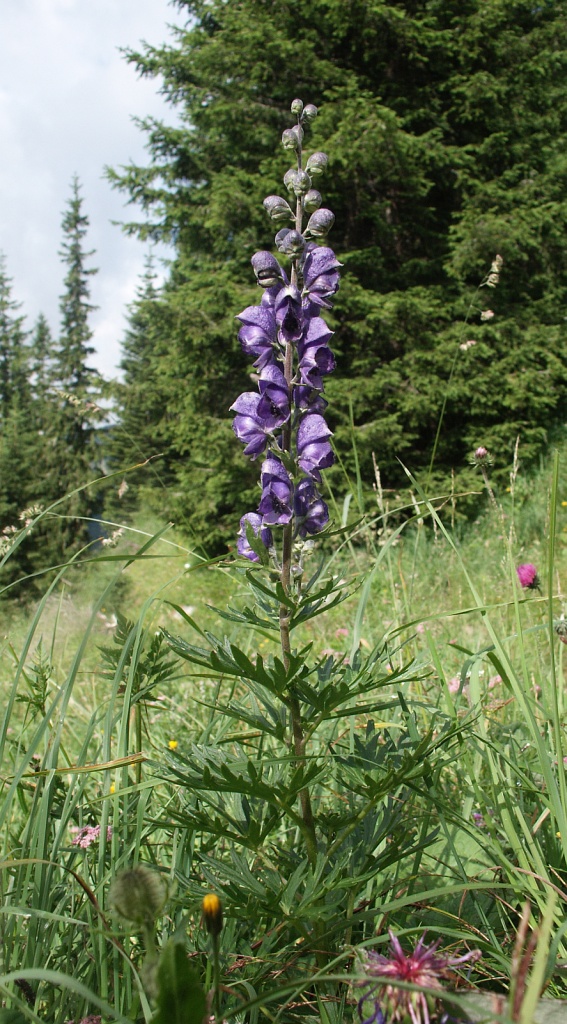
 Wikimedia Commons
Ranunculaceae
Helmet Flower
Aconitum napellus
Danger and treachery concealed in beauty.
- Family
- Ranunculaceae
- Genus
- Aconitum
- Native to
- Europe, Central Asia
- Bloom season
- Summer, Early Fall
- Type
- herbaceous perennial
- Height
- 60–150 cm
- Sunlight
- part shade to full sun
- Soil
- moist, rich, well-drained
- Water
- moderate to high
- Hardiness
- 3–7
- Lifespan
- perennial
Did you know
- Also called monkshood or wolfsbane, it is one of the most poisonous plants in Europe — all parts are lethal if ingested.
- The helmet-shaped upper sepal hides two nectaries inside that only long-tongued bumblebees can reach.
- In ancient times, the root poison (aconitine) was smeared on arrow tips and used to bait wolves, hence 'wolfsbane.'
- The alkaloid aconitine disrupts sodium channels in nerve cells, and there is no reliable antidote.
- Despite its toxicity, it was used in traditional Chinese medicine in highly diluted preparations for pain relief.
Color meanings
0
caution
1
chivalry
2
misanthropy