 Wikimedia Commons
Brassicaceae
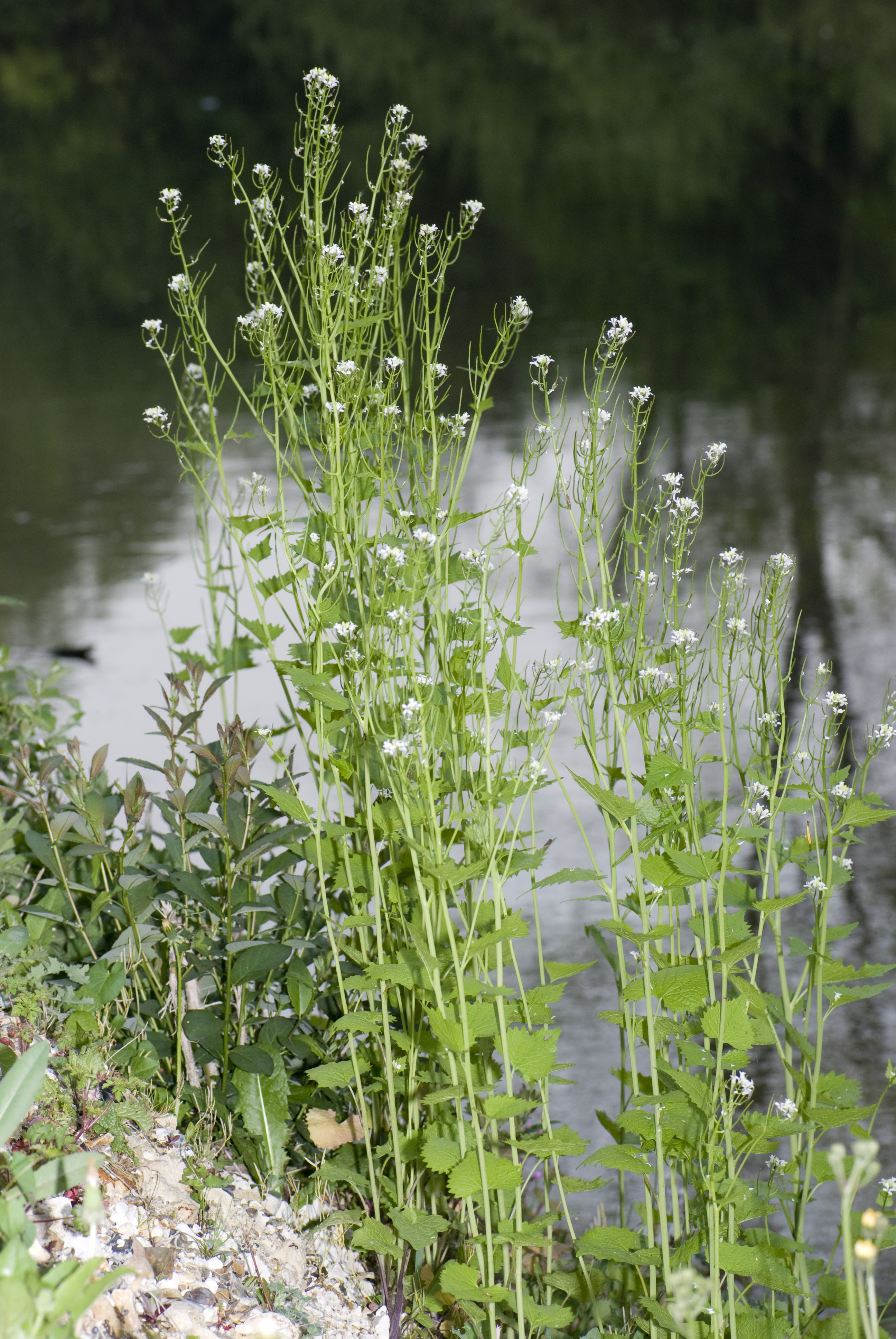
Hedge Garlic
Alliaria petiolata
Invasion and the double-edged power of adaptability.
- Family
- Brassicaceae
- Genus
- Alliaria
- Native to
- Europe, Western Asia, North Africa
- Bloom season
- Spring, Early Summer
- Type
- biennial herb
- Height
- 30–120 cm
- Sunlight
- part shade to full shade
- Soil
- moist, rich woodland soils
- Water
- moderate
- Hardiness
- 3–8
- Lifespan
- biennial
Did you know
- Also known as garlic mustard, crushed leaves release a pungent garlic aroma though it is unrelated to true garlic.
- It is one of the most aggressive invasive plants in North American forests, outcompeting native wildflowers.
- The plant produces chemicals that disrupt mycorrhizal fungi, sabotaging the root networks of surrounding trees.
- In medieval Europe it was a popular potherb — the garlicky leaves were used before garlic became widely available.
- A single plant can produce over 7,000 seeds that remain viable in soil for up to five years.
Color meanings
0
adaptability
1
persistence
2
wild flavoring