 Wikimedia Commons
Liliaceae
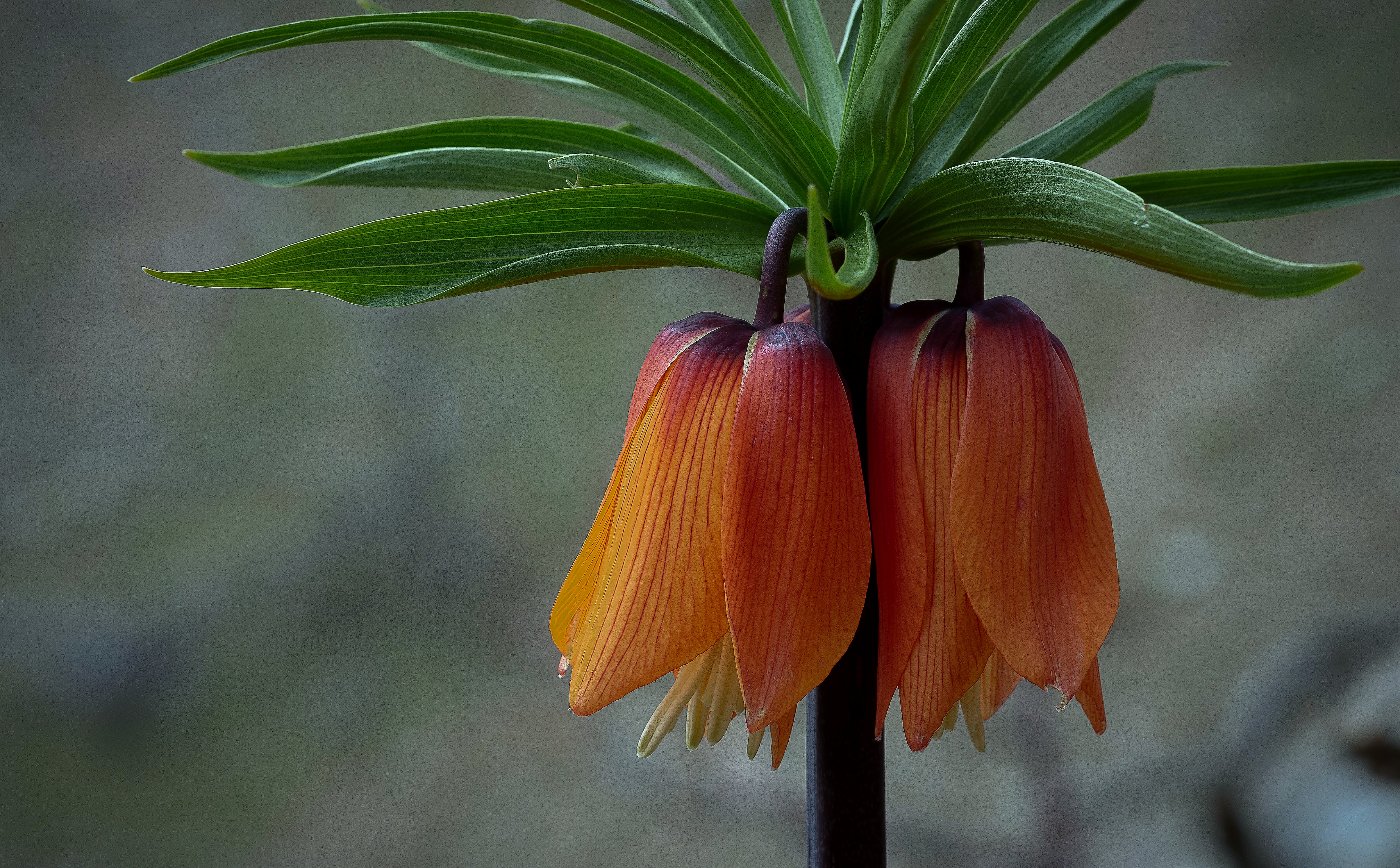
Crown Imperial Fritillary
Fritillaria imperialis
Majesty, power, pride, royal arrogance.
- Family
- Liliaceae
- Genus
- Fritillaria
- Native to
- Anatolia, Iran, Afghanistan, Pakistan, Himalayas
- Bloom season
- Mid-Spring
- Type
- bulbous perennial
- Height
- 60–100 cm
- Sunlight
- Full sun
- Soil
- Well-drained, rich
- Water
- Moderate; dry after bloom
- Hardiness
- 5–9
- Lifespan
- Perennial
Did you know
- Crown imperials emit a strong, skunky musk that some find unpleasant — but the smell is said to repel deer, mice, voles, and squirrels from gardens.
- Each downward-facing flower contains a single 'tear' of nectar at the base of each petal — Persian legend says these are tears the flower has wept since the Garden of Eden.
- The genus name 'Fritillaria' comes from the Latin 'fritillus' (dice cup), referring to the checkerboard pattern of some species.
- Crown imperials were one of the first Eastern flowers introduced to European gardens, arriving in the late 16th century from Constantinople.
- All parts of the plant are toxic — the bulbs contain alkaloids that can cause cardiac irregularities.