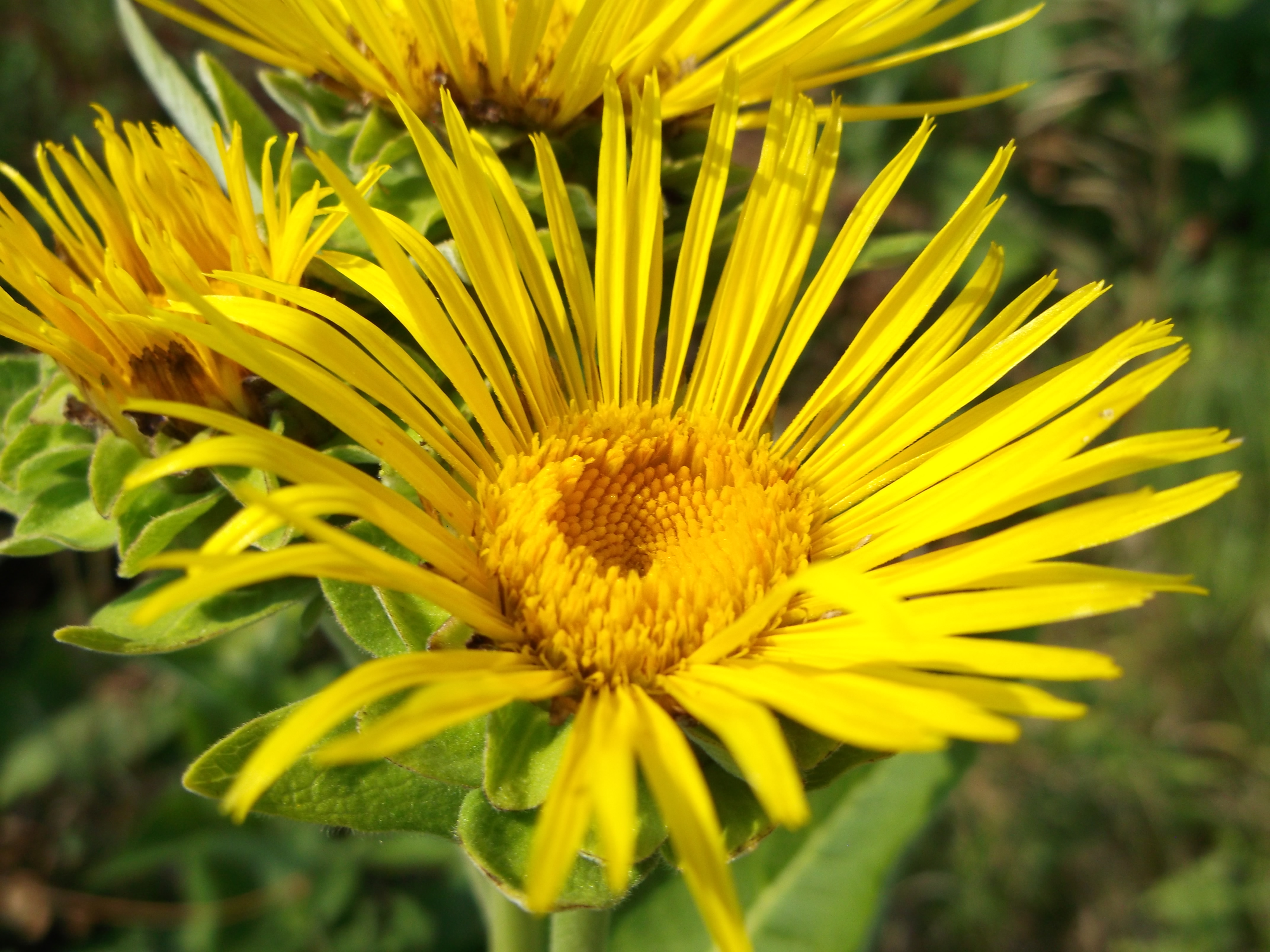
 Wikimedia Commons
Asteraceae
Elecampane
Inula helenium
Ancient healing.
- Family
- Asteraceae
- Genus
- Inula
- Native to
- Central Asia, Eastern Europe
- Bloom season
- Summer
- Type
- perennial herb
- Height
- 4-8 ft
- Sunlight
- full sun to part shade
- Soil
- moist, deep, fertile
- Water
- moderate
- Hardiness
- 3-8
- Lifespan
- perennial
Did you know
- The species name helenium refers to Helen of Troy — legend holds the plant sprang from the ground where her tears fell as she was abducted.
- The root contains inulin, a prebiotic fiber whose name was derived from the plant Inula, making elecampane historically significant to nutritional science.
- It was a major medicinal plant in ancient Rome, medieval Europe, and Indigenous North American traditions, used primarily for respiratory ailments.
- Elecampane root was used as a flavoring for absinthe and vermouth, and was a common candy ingredient in Victorian England under the name 'scone.'
- The plant can reach 8 feet tall, with leaves up to 2 feet long and flower heads up to 4 inches across, making it one of the most imposing wildflowers in temperate gardens.
Color meanings
0
healing
1
protection
2
tenacity