 Wikimedia Commons
Liliaceae
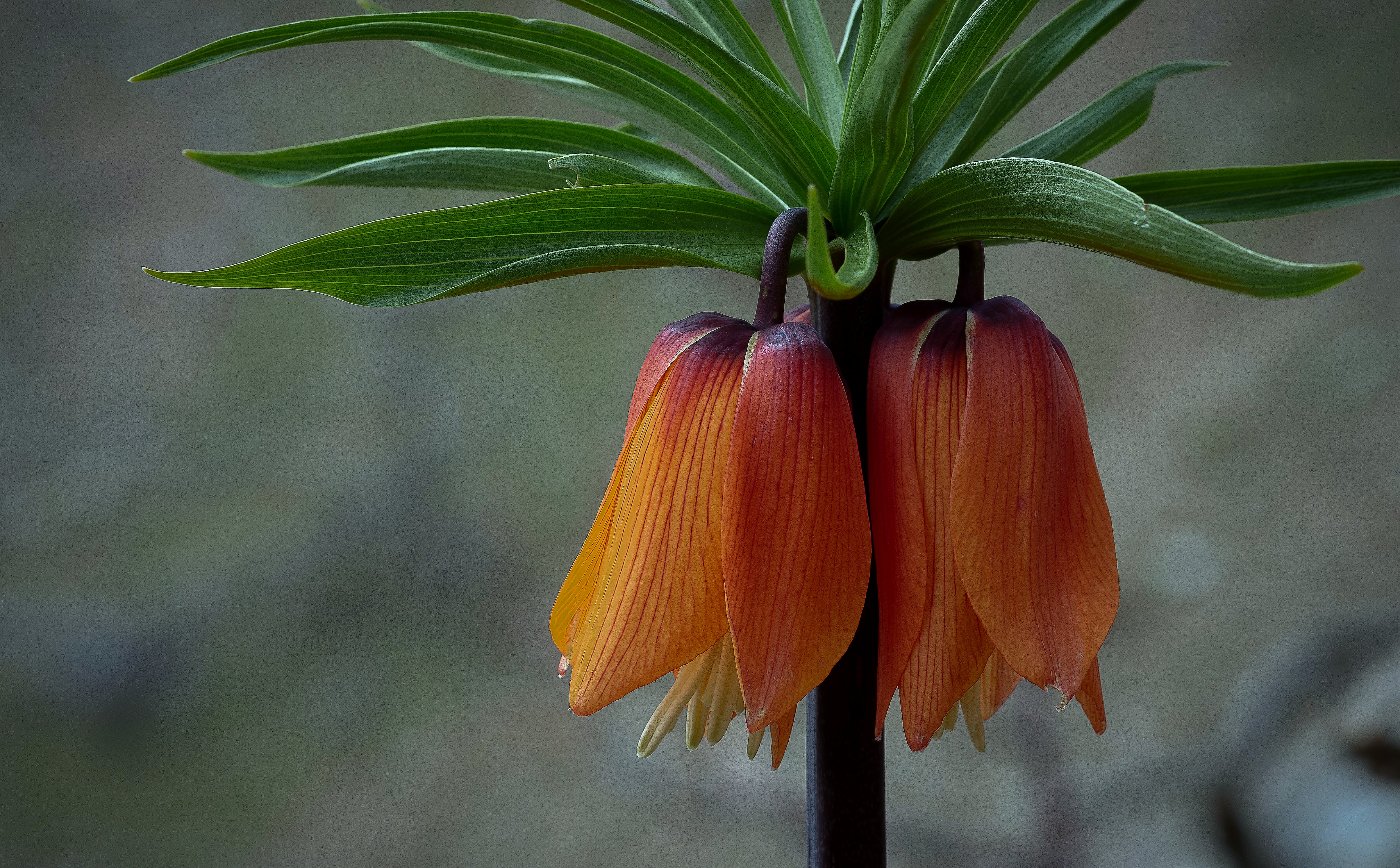
Crown Imperial
Fritillaria imperialis
Majesty, power, divine sorrow.
- Family
- Liliaceae
- Genus
- Fritillaria
- Native to
- Turkey, Iran, Afghanistan, Pakistan
- Bloom season
- Spring
- Type
- Bulbous perennial
- Height
- 75–120 cm (2.5–4 ft)
- Sunlight
- Full sun to part shade
- Soil
- Rich, well-drained
- Water
- Moderate
- Hardiness
- 5–9
- Lifespan
- Long-lived perennial
Did you know
- The crown imperial is one of the oldest cultivated bulbs in Europe, brought from Constantinople in 1576—it became the centerpiece of every great Renaissance garden, including those of the Medici.
- Christian legend says the crown imperial was once white and grew in the Garden of Gethsemane, but bowed its head in shame when Jesus prayed alone—and has wept tears of nectar ever since (you can see real droplets at the base of each petal).
- The bulbs and leaves smell strongly of fox or skunk—an evolutionary trick to repel rodents and deer, who give crown imperial plantings a wide berth.
- Each towering stem bears a 'crown' of orange or yellow bells topped with a tuft of green leaves like a feathered hat—visible from across an entire garden in April.
- Featured prominently in 17th-century Dutch flower paintings (especially by Bosschaert and Brueghel), where it became a symbol of the wealth and exoticism of the spice routes.
Color meanings
0
majesty
1
power
2
regal sorrow