 Wikimedia Commons
Araceae
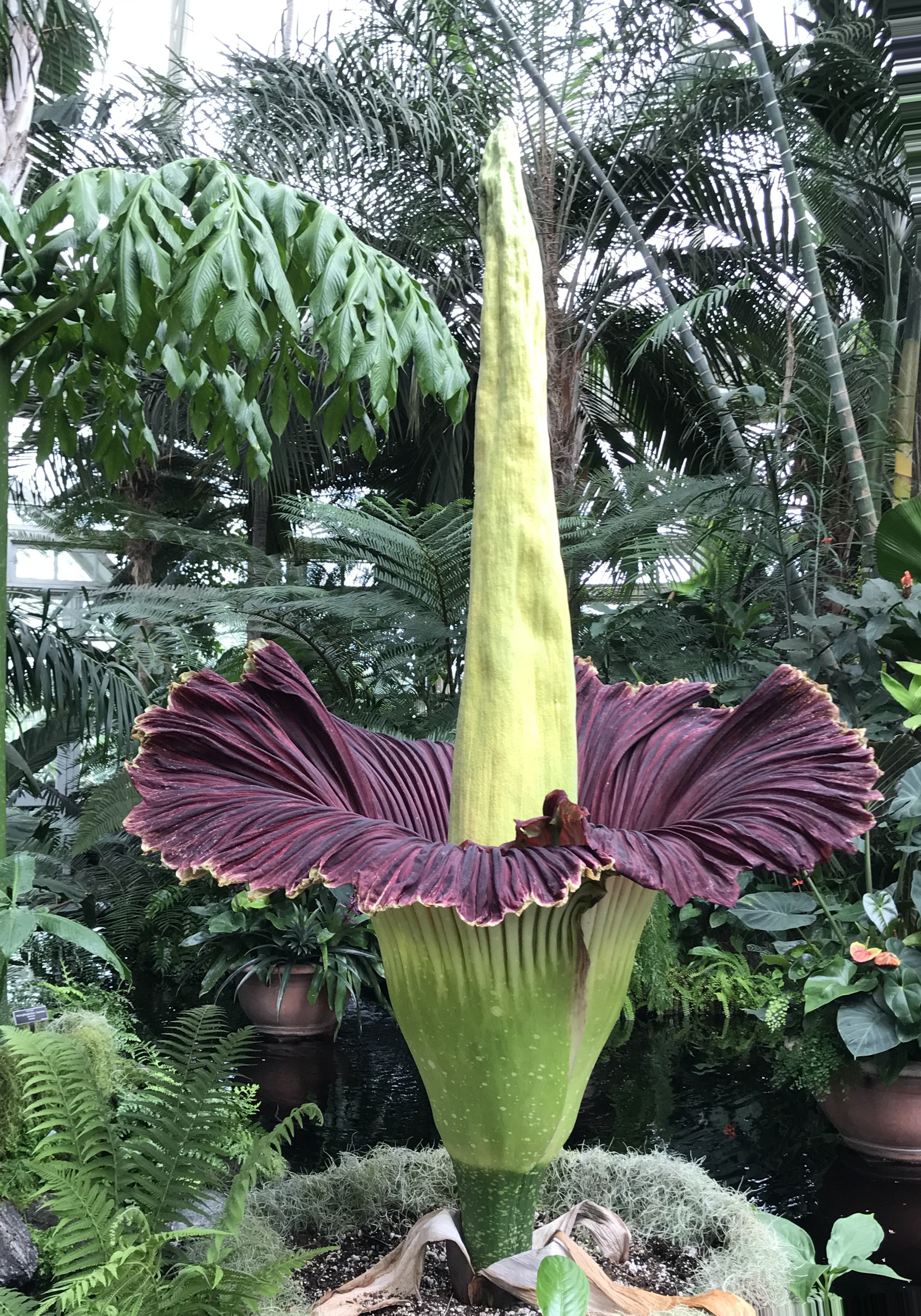
Corpse Flower
Amorphophallus titanum
Rare fleeting beauty.
- Family
- Araceae
- Genus
- Amorphophallus
- Native to
- Sumatra, Indonesia
- Bloom season
- Sporadic
- Type
- tuberous perennial
- Height
- 6-12 ft
- Sunlight
- part shade
- Soil
- rich, moist, well-drained
- Water
- moderate
- Hardiness
- 11-12
- Lifespan
- perennial
Did you know
- The corpse flower produces the world's largest unbranched inflorescence, reaching up to 10 feet tall, and blooms for only 24–48 hours before collapsing — sometimes just once per decade.
- The notorious rotting-flesh odor is a biochemical mimicry strategy: the plant heats itself to near body temperature and emits compounds like dimethyl trisulfide to attract dung beetles and carrion flies as pollinators.
- The corm (underground tuber) can weigh over 200 pounds after years of energy storage — it needs this enormous reserve to fuel the rapid growth of the inflorescence, which can grow several inches per day.
- Botanically, what looks like a single giant flower is actually thousands of tiny male and female flowers packed into a central spike (spadix) wrapped by a frill-like spathe.
- Blooming events at botanical gardens routinely draw thousands of visitors and generate global news coverage; zoos and gardens have been known to extend hours and live-stream the event.
Color meanings
0
rarity
1
transformation
2
decay and renewal