 Wikimedia Commons
Solanaceae
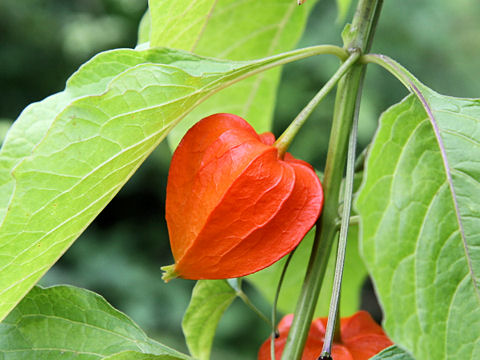
Chinese Lantern
Physalis alkekengi
Festive light and welcome of the dead.
- Family
- Solanaceae
- Genus
- Physalis
- Native to
- southern Europe, western Asia
- Bloom season
- Summer (Flowers), Fall (Lanterns)
- Type
- herbaceous perennial
- Height
- 60–80 cm
- Sunlight
- full sun to part shade
- Soil
- well-drained, fertile
- Water
- medium
- Hardiness
- 3–9
- Lifespan
- perennial; spreads by rhizome
Did you know
- After flowering, the calyx swells into a bright orange papery 'lantern' enclosing a single red berry.
- In Japan it is called 'hozuki' and traditionally placed on Obon altars to guide ancestor spirits home.
- The lanterns can be dried and used for years in floral arrangements without losing their color.
- The ripe inner berries are edible and similar to cape gooseberries, but the unripe fruit and foliage are toxic.
- Its rhizomes spread aggressively — most gardeners contain it in pots to keep it in check.
Color meanings
White
modest summer flower
Orange
lantern of remembrance