 Wikimedia Commons
Myrtaceae
Bottlebrush
Callistemon citrinus
Resilience, fiery passion, the Australian wild.
- Family
- Myrtaceae
- Genus
- Callistemon
- Native to
- Eastern Australia
- Bloom season
- Spring, Summer, Fall
- Type
- evergreen shrub or small tree
- Height
- 1.5–8 m
- Sunlight
- Full sun
- Soil
- Well-drained, acidic
- Water
- Low to moderate
- Hardiness
- 9–11
- Lifespan
- Perennial
Did you know
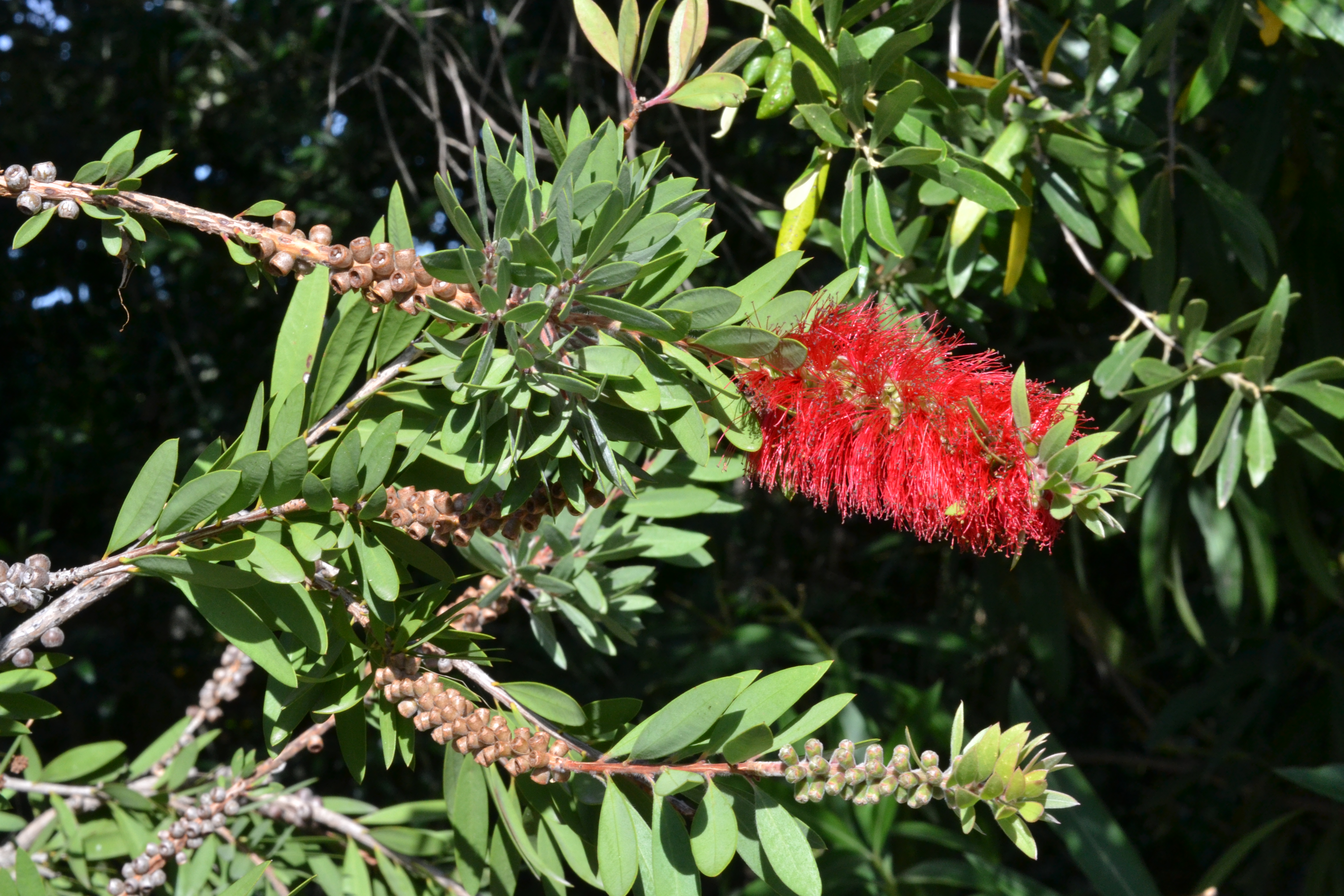
- The flower spikes look exactly like cylindrical bottle brushes, with hundreds of long red stamens packed tightly together — the petals themselves are tiny.
- Bottlebrush flowers are pollinated by birds, especially honeyeaters and lorikeets, which feed on the abundant nectar.
- Like many Australian natives, bottlebrush seeds are released from woody fruits only after exposure to fire — a fire-dependent reproductive strategy.
- Crushed leaves smell strongly of lemon and have been used in folk medicine and as an insect repellent.
- Bottlebrush is so widely planted as a street tree that it's become a familiar sight in warm climates worldwide, including California, the Mediterranean, and South Africa.