 Wikimedia Commons
Rosaceae
Agrimony
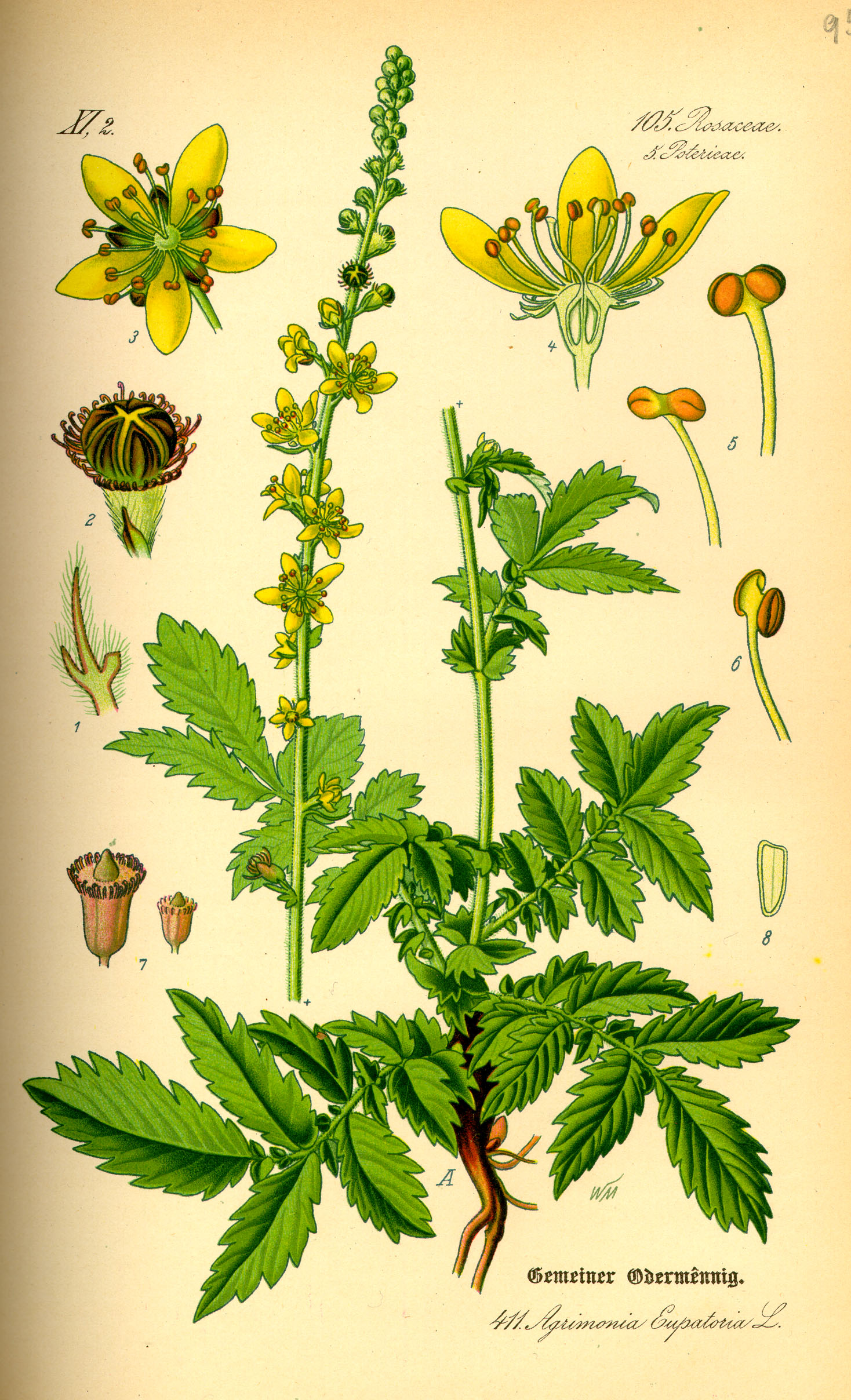
Agrimonia eupatoria
Gratitude and thankfulness.
- Family
- Rosaceae
- Genus
- Agrimonia
- Native to
- Europe, Western Asia, North Africa
- Bloom season
- Summer
- Type
- perennial herb
- Height
- 1-3 ft
- Sunlight
- full sun to part shade
- Soil
- dry to moderately moist, neutral to alkaline
- Water
- low
- Hardiness
- 5-9
- Lifespan
- perennial
Did you know
- Agrimony was one of the most important wound herbs in medieval European medicine — it was combined with other ingredients to make 'arquebusade water,' used to treat gunshot wounds.
- The species name 'eupatoria' honors Mithridates Eupator, king of Pontus in the 1st century BC, who was famed for his extensive knowledge of poisons and antidotes and is said to have used agrimony medicinally.
- The hooked bristles on agrimony's small bur fruits are a classic example of epizoochory — seed dispersal by attachment to animal fur and human clothing — a strategy that reportedly inspired George de Mestral to invent Velcro.
- Modern herbalism uses agrimony tea for digestive complaints, sore throats, and as a mild astringent — it contains tannins, flavonoids, and bitter compounds that have been shown to have anti-inflammatory effects.
- Agrimony was historically used to make a yellow-green dye for wool and linen, and in parts of rural France it was still being used for this purpose in the early 20th century.
Color meanings
0
gratitude
1
thankfulness
2
healing